

Most washing machines last between 10 and 14 years. Top-loaders tend to run 10-12 years; front-loaders typically stretch to 11-14, though they’re more likely to need repairs in the first few years. High-end brands like Speed Queen and Miele are built differently and can hit 20-25 years with proper care.
That said, washing machine lifespan isn’t just about the brand on the door. How you load it, what’s in your water, and how often you clean it matter just as much. In Tampa Bay, hard water and humidity push that number down faster than most people expect.
How long do washing machines last on average?
Perfect Appliance Repair Tampa
What affects washing machine life expectancy?
Average lifespan by washer type
Standard top-loaders average 10-12 years. They’re simpler machines with fewer seals and no door gasket to worry about. Front-loaders run 11-14 years in ideal conditions, but the bearings and door seals are the first things to go. High-efficiency top-loaders fall in between. Speed Queen commercial-grade units are built to run 20-25 years; Miele front-loaders are in the same range if you follow the maintenance schedule. Most brands you’d find at a big-box store, LG, Samsung, Whirlpool, you’re looking at 10-13 years with average use.
Factors that shorten washing machine life
Overloading is the biggest killer. It stresses the drum bearings and the drive motor on every single cycle. Hard water deposits clog pump filters and corrode heating elements over time. Using regular detergent in an HE machine creates excess suds that damage door seals and internal components. Skipping drum cleaning lets bacteria and residue build up, which accelerates rubber decay.
Factors that extend washing machine life
Running a self-clean or drum-cleaning cycle once a month clears residue before it causes damage. Keeping loads balanced takes stress off the bearings. On front-loaders, leaving the door cracked after each wash lets moisture escape and slows mold growth on the gasket. An annual inspection from a technician catches small issues before they become expensive ones. Washing machine lifespan goes up noticeably with consistent maintenance.
Signs your washing machine is near end of life
Water pooling under the machine usually means a failing pump seal or a cracked hose. A burning smell during a cycle is a motor problem and means you stop the machine now. If the drum isn’t agitating or spinning, the drive belt or control board has likely failed. Excessive vibration that’s gotten worse over months points to worn drum bearings. Repeated error codes on a machine that’s already been serviced twice for the same issue are a reliable signal that replacement is the smarter move.
Washing machine repair vs. replace decision
The 50% rule is the standard guide: if the repair cost is more than half what a comparable new unit costs, and the machine is 8 years or older, replace it. You’re too close to the end of the washing machine lifespan to justify the spend. Under 8 years, washer repair almost always makes financial sense. A $250 repair on a 5-year-old machine with 7 more years ahead of it is money well spent. Over 8 years, that same repair might just be delaying a bigger failure by 18 months.
How to make your washing machine last longer
Maintenance isn’t complicated. These six steps, done consistently, add real years to any washing machine:
- Run a self-clean or drum-cleaner cycle every month. Residue builds up faster than you’d think, and it breaks down rubber seals over time.
- Wipe the door gasket on front-loaders after every few washes. Mold gets into the folds of that rubber seal and eats through it. Once the gasket tears, water leaks, and a repair that costs $150 now becomes a floor replacement later.
- Pull and clean the pump filter every three months. It catches lint, coins, and debris. A clogged filter strains the pump motor on every drain cycle.
- Don’t overfill. A washing machine drum should be about three-quarters full, loose. Packing it tight stresses the bearings every single spin cycle.
- Use HE detergent in HE machines. Standard detergent produces too many suds. Those suds don’t drain cleanly and leave residue that damages internal seals over time.
- Check the water supply hoses once a year. Look for bulging, cracking, or mineral buildup near the connections. A hose failure floods a laundry room in minutes.
When should you get your washing machine serviced?
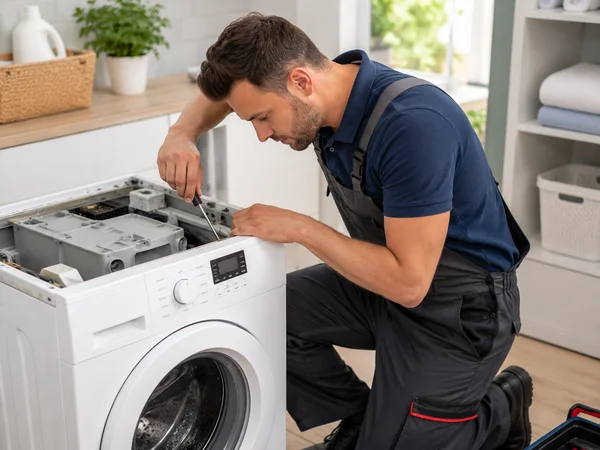
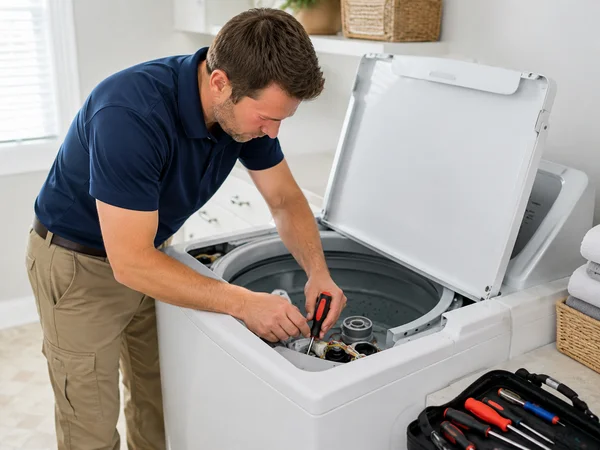
Once a year is the right cadence for a routine checkup, even if nothing seems wrong. A technician can spot a bearing that’s starting to wear, a hose that’s getting brittle, or a filter so clogged it’s straining the pump. Catching those things early is a lot cheaper than reacting to them after they fail.
Outside the annual check, call for service when you hear grinding or squealing during a spin cycle, when vibration has gotten noticeably worse over the last few months, when the drum isn’t agitating at all, when water isn’t draining at the end of a cycle, or when the same error code keeps coming back after a reset. Any of those is a sign the machine needs attention, not just a restart.
In Tampa Bay, hard water mineral buildup clogs pump filters faster than in softer-water markets. Perfect Appliance Repair Tampa recommends checking and clearing your pump filter every three months, not the six months most manuals suggest. The minerals in the water here are hard on internal components, and staying ahead of buildup keeps washer repair calls less frequent.
Washing machine repair in Tampa Bay, FL
Tampa Bay’s hard water and humidity are rough on washer seals and bearings. Mike sees it every week. Mineral deposits build up in pump filters, door gaskets go soft from the moisture, and bearings wear faster than they would in a drier climate. It’s just part of owning a washing machine here.
If your washer is showing age, one service call from Perfect Appliance Repair Tampa can tell you whether it’s worth fixing or time to replace. Upfront pricing before any work starts, honest repair-vs-replace advice with no pressure either way. Call or book online today.
Common questions about washing machine lifespan
How long should a washing machine last?
Most washing machines last 10-14 years. Top-loaders run 10-12 years on average; front-loaders stretch to 11-14 with proper maintenance. Brands like Speed Queen and Miele are built for 20-25 years. Usage habits and water quality affect the actual number significantly.
Is it worth repairing a 10-year-old washing machine?
It depends on the repair cost. If the repair is under 50% of a replacement unit's price, it can make sense. At 10 years, you may have 2-4 years left on the appliance lifespan, so weigh that against the repair bill. Perfect Appliance Repair Tampa gives honest repair-vs-replace advice before any work starts.
Which brand of washing machine lasts the longest?
Speed Queen and Miele consistently come out on top for washing machine lifespan, both rated for 20-25 years with regular maintenance. For mid-range machines, Maytag and Whirlpool tend to hold up better than some of the newer electronics-heavy models, which have more components that can fail.
How do I know when my washing machine needs to be replaced?
Signs include repeated error codes that keep coming back, a burning smell during the cycle, a drum that won't agitate or spin, water leaking from the bottom of the unit, and vibration that's steadily gotten worse. If the repair cost is over 50% of a new machine and the unit is 8 or more years old, replacing is usually the smarter call.
Does overloading a washing machine shorten its life?
Yes, consistently. Overloading stresses the drum bearings and drive motor on every cycle. Over time, that wear adds up faster than normal use would cause. Keeping loads to about three-quarters full protects the bearings and extends the washing machine's useful life by years.