

The short answer: use the 50% rule. New washing machines run $500 to $1,200, so if your repair cost tops $250 to $600, replacing starts to make more sense. Under 5 years old, almost always repair. Between 5 and 10 years, run the 50% math first. Over 10 years, lean toward replacing, unless it’s a high-end front-loader under 12 years. Small repairs like a pump, lid switch, or belt are worth doing at any age. They’re cheap relative to replacement and add years of life.
Is it worth fixing a washing machine?
Perfect Appliance Repair Tampa
How to decide: washing machine repair or replace
The 50% rule for washing machines
A basic top-loader runs $500 to $700. Mid-range models hit $800 to $1,000. High-end front-loaders go $1,000 to $1,200 or more. The 50% rule says: if your repair cost is more than half the price of a comparable new machine, start shopping instead. On a $600 washer, that threshold is $300. On a $1,000 front-loader, it’s $500. It’s not a hard rule, but it’s a useful filter before you call a tech.
Age is the key factor
Top-loaders typically last 10 to 14 years. Front-loaders run 10 to 12 years on average. Washing machine lifespan shrinks in Florida homes with hard water, which eats through drum bearings and pump seals faster than average. A 9-year-old washer showing its first problem is very different from a 9-year-old washer on its third repair.
Repairs always worth doing
Some fixes are cheap enough to make sense at any age. Pump replacement runs $130 to $200. A lid switch is $100 to $150. Door latch repairs land around $100 to $175. Belt replacements come in at $100 to $160. None of those crack the 50% threshold on any washer made in the last decade. If Perfect Appliance Repair Tampa quotes you one of these, it’s worth doing.
Repairs that trigger the 50% rule on older machines
Motor replacement costs $220 to $350. Control board failure runs $200 to $300. Drum bearing repair comes in at $250 to $400. Any of these on a 10-year-old machine and you’re right at the 50% line, sometimes over it. That’s when washing machine repair or replace becomes a real decision, not an obvious one. Age and repair history both matter here.
Front-loader vs top-loader economics
Front-loaders cost more to repair. Door boot seals, bearing assemblies, and control boards are pricier parts with more labor time. But front-loaders also cost more to replace. A high-end LG or Samsung front-loader under 12 years old is usually worth repairing if the problem is a single component. On a budget front-loader past 10 years, the math often flips. Perfect Appliance Repair Tampa can tell you exactly where your machine lands.
Low-cost repairs that extend washer life
Not every fix needs a technician. A clogged pump filter is the most common cause of slow draining in front-loaders, and cleaning it takes five minutes and costs nothing. Do it every quarter. Washer cleaner cycles once a month slow drum and bearing wear by keeping buildup off internal surfaces. That’s free maintenance that buys real time.
On front-loaders, a worn door boot seal is a $30 to $60 part and an intermediate DIY job. Left alone, a leaking boot can cause drum and bearing damage that costs $300-plus to fix. On top-loaders, a failed lid switch is a $20 to $40 part and a straightforward swap. These small investments add 2 to 3 years of washing machine life without touching the 50% rule threshold. Worth doing before you call for a diagnosis.
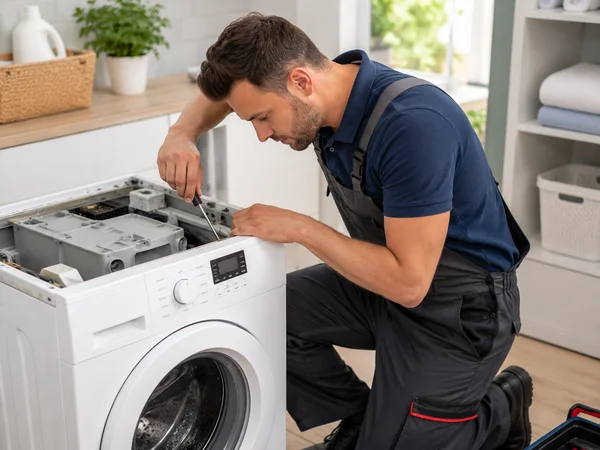
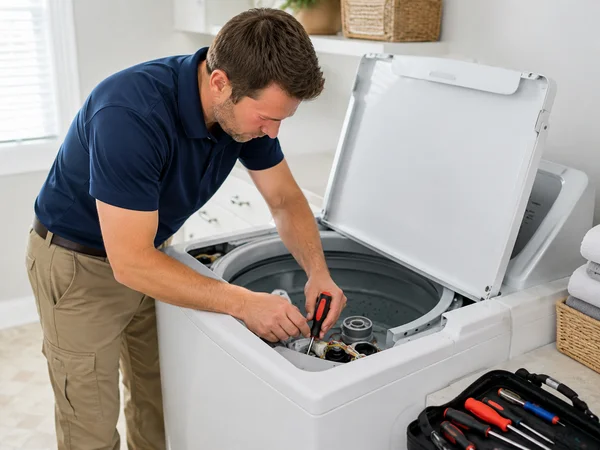
When is a washing machine not worth repairing?
Drum bearing grinding on a machine older than 10 years is a tough call. Repair cost runs $250 to $400, which on a basic top-loader is close to or past the 50% mark. On top of that, once bearings go, the drum seal usually follows. You’re often looking at two repairs stacked together.
Control board failure on a 12-plus year machine is another clear signal to replace. The board is $200 to $300 before labor, and if the machine is that old, something else will break in the next year. A second major repair within 12 months on any washer is a pattern, not bad luck. That’s systemic wear, and replacement makes more financial sense.
Rust on the drum interior is non-negotiable. It’s a safety issue and replacement is the only answer. One more factor: if your current washer uses 40-plus gallons per load, a new Energy Star model saves $50 to $80 a year on water and energy. On an older machine already needing repair, that savings tilts the math toward replacing.
Honest washing machine repair advice in Tampa Bay, FL
Perfect Appliance Repair Tampa gives you a straight answer before any work starts. If your washer isn’t worth fixing, Mike will tell you. No upsell, no vague estimates. Tampa Bay’s hard water is rough on bearings and pump seals, so catching wear early often prevents a much bigger repair bill later. Diagnostic fee is waived when you move forward with the repair. Call or book online today.
Common questions about washing machine repair and replacement
Is it worth repairing a 7-year-old washing machine?
Usually yes, if it's the first major repair. A 7-year-old washer has a good 5 to 7 years of life left. Run the 50% rule: if the repair cost is under half the price of a comparable new machine, it's worth fixing. Perfect Appliance Repair Tampa can give you a firm quote before you decide.
How much is too much to spend repairing a washing machine?
The 50% rule puts the threshold at $250 to $600 depending on what a new washer costs. Basic top-loaders are cheaper to replace, so the bar is lower. High-end front-loaders cost more to buy new, so you can justify a higher repair cost. Age and repair history both factor in.
What are the most expensive washing machine repairs?
Drum bearing replacement ($250 to $400), motor failure ($220 to $350), and control board replacement ($200 to $300) are the big ones. Any of these on a machine past 10 years old puts you right at or over the replacement threshold. A pump or lid switch, by contrast, is rarely a reason to walk away.
How long should a washing machine last?
Top-loaders average 10 to 14 years. Front-loaders run 10 to 12 years. Washing machine lifespan is shorter in areas with hard water, which wears out pump seals and drum bearings faster. Regular maintenance, like monthly cleaner cycles and quarterly pump filter checks, pushes the upper end of that range.
Is it better to repair or replace a front-load washer?
Depends on age and the specific problem. Front-loaders cost more to repair than top-loaders, but they also cost more to replace. A high-end front-loader under 10 to 12 years old with a single component failure is almost always worth repairing. Past 12 years or on a second major repair, the math shifts. Perfect Appliance Repair Tampa can walk you through the numbers.