

Most of the time, a washer shaking violently comes down to two things: an unbalanced load or a machine that’s not sitting level. Check those first before you call anyone. If redistributing the clothes and adjusting the feet don’t stop it, you’re probably looking at a mechanical problem — worn drum bearings, broken shock absorbers, damaged suspension rods, or a failed motor mount. Quick read on what’s going on: if the shaking only happens on the spin cycle and only sometimes, it’s almost always a load issue. If the machine vibrates constantly no matter what’s in it, that’s a mechanical problem and it’s not going away on its own.
Why is my washing machine shaking so much?
Perfect Appliance Repair Tampa
What causes a washing machine to shake violently?
Unbalanced load (most common)
Toss one heavy item — a comforter, jeans, a single towel — into a washer and it’ll throw the drum off-center the second it starts spinning. The machine compensates as best it can, but past a certain point it just rattles. Fix: stop the cycle, open the door, and redistribute the clothes evenly around the drum. Don’t wash single heavy items alone. Pair a comforter with a few towels to keep the weight spread out. No parts, no tools, no cost.
Machine not level
A washer that’s sitting even slightly off-level will rock on spin. All four feet need to contact the floor. Most machines have adjustable feet you can turn by hand or with a wrench. Set a small level on top of the machine, adjust until the bubble is centered, then lock the feet in place with the jam nuts. If the floor itself is soft or uneven, a rubber anti-vibration mat under the machine helps a lot.
Worn drum bearings
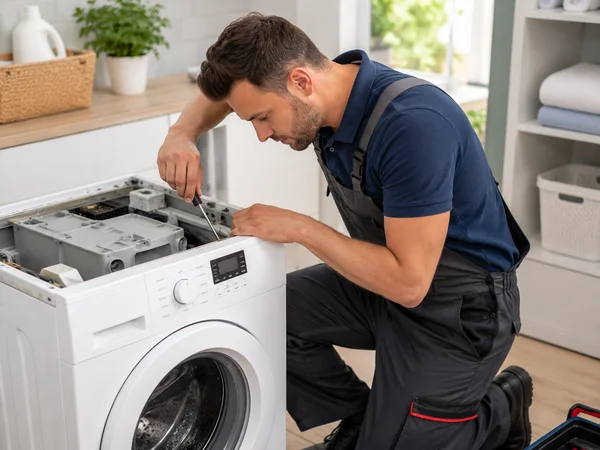
Drum bearings let the inner tub spin smoothly. When they start to go, you get a deep rumbling or grinding noise along with shaking, especially on the spin cycle. It gets louder over time. This is an internal washing machine repair — the tub has to come apart. On most front-loaders, labor runs $150 to $300 depending on access. The parts themselves aren’t expensive, but the job is. Worth fixing if the machine is under ten years old.
Broken shock absorbers (front-loaders)
Front-load washers use shock absorbers to dampen the movement of the drum during spin. When one breaks, the drum swings freely and the machine shakes hard — sometimes bad enough to walk across the floor. You’ll usually see it on high-speed spin. Shock absorbers are a straightforward washing machine repair: two to four bolts, slide the old one off, slide the new one on. Parts run $20 to $60 each. A tech can usually knock this out in under an hour.
Damaged suspension rods (top-loaders)
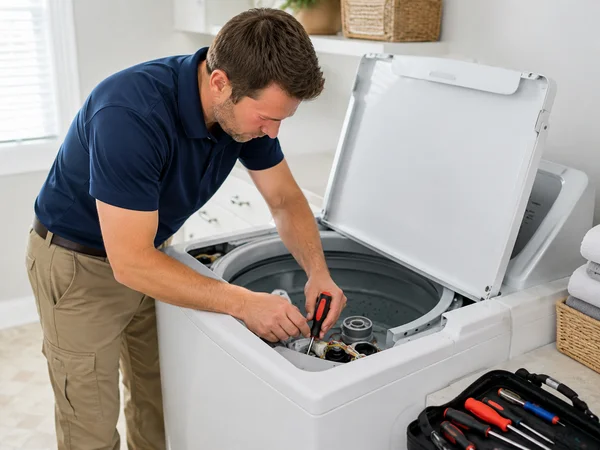
Top-load washers hang the inner tub from four suspension rods with springs on each corner. If one rod snaps or the spring wears out, the tub hangs unevenly and bangs around on spin. You can sometimes spot a broken rod by pressing down on each corner of the tub — one corner will feel loose or drop further than the others. Replacing all four at once is the right move since they wear together. Parts cost $30 to $80 for a set.
Motor mount failure (rare)
The motor sits on rubber mounts that absorb vibration. When those mounts crack or collapse, the motor transmits every bit of movement straight to the frame. This is less common than the other causes, but when it happens the whole machine shudders even at low speeds. It’s not a DIY fix for most people — getting to the motor means disassembling a good portion of the machine. If a tech has already ruled out load issues, leveling, and shock absorbers, motor mounts are worth checking.
How to stop your washing machine from shaking (DIY steps)
Most shaking problems have a straightforward fix you can try before scheduling a washing machine repair. Work through these in order.
- Redistribute the load. Stop the cycle, open the door, and spread the clothes evenly around the drum. Never wash one heavy item by itself — pair it with a few lighter pieces to balance the weight.
- Check and adjust the leveling feet. Put a small level on top of the machine. Turn each foot up or down until all four contact the floor evenly. Lock them in place by tightening the jam nut up against the cabinet. This takes five minutes and fixes a surprising number of cases.
- Make sure the machine is on a firm, flat surface. A washer on a soft wood floor or a surface that flexes will shake more. A rubber anti-vibration mat costs about $20 and cuts down noise and movement noticeably.
- Check that shipping bolts were removed. New machines ship with bolts that lock the drum in place for transport. If those bolts are still in, the machine will shake violently from the first spin. Check the back panel — they’re usually bright red or yellow plastic.
- Switch to HE detergent. Too many suds throw off the balance of the load during the spin cycle. Use only HE (high-efficiency) detergent in the amount recommended, not more.
If none of that stops it, the problem is mechanical. Worn drum bearings and broken shock absorbers aren’t something you can fix by adjusting a foot — those need a tech.
When should you call a washer repair tech?
Some shaking you can fix yourself. But a few situations mean it’s time to call for washing machine repair before the problem gets worse.
Call a tech if you hear a loud grinding or rumbling noise during the spin cycle. That’s almost always worn drum bearings. Running a washer with bad bearings doesn’t just get louder — over time it damages the drum shaft and the outer tub. What starts as a $200 bearing job can turn into a $500 tub replacement if you wait too long.
Call if the machine is shaking severely and leveling the feet didn’t help. Severe vibration — the kind where the machine walks across the floor or bangs into the wall — means a component has failed, not just shifted. Shock absorbers on a front-loader or suspension rods on a top-loader are the usual culprit.
Call if you see water leaking during the spin cycle. Hard vibration can work loose a door seal or a hose connection. That’s a water damage risk, not just a noise problem.
Bottom line: if the machine is moving across the floor on its own, something is broken. Catching it early is almost always cheaper than letting it run until the damage spreads.
Washing machine repair in Tampa Bay, FL
Perfect Appliance Repair Tampa diagnoses shaking washers the same day in most cases. Mike has been doing washing machine repair across Tampa Bay for 19 years, and drum bearings come up more here than in a lot of markets. Tampa’s heat and humidity speed up wear on rubber seals and metal components — bearings that might last 12 years in a dry climate often need attention in 7 or 8 down here. If your washer is shaking violently or making grinding noises on spin, don’t run it into the ground. Call Perfect Appliance Repair Tampa, get a straight answer on what it’ll cost, and we’ll tell you upfront whether the repair makes sense for the age of the machine.
Common questions about a washing machine shaking violently
Why is my washing machine shaking violently?
The most common cause is an unbalanced load — one heavy item throws the drum off-center during spin. If redistributing the clothes doesn't fix it, check that all four leveling feet are contacting the floor. Mechanical causes include broken shock absorbers, worn drum bearings, or failed suspension rods.
How do I stop my washing machine from vibrating?
Start with the simple fixes: redistribute the load so weight is spread evenly, then check the leveling feet with a small level and adjust until the machine sits flat. A rubber anti-vibration mat under the washer also helps on hard floors. If the machine still shakes after that, a mechanical part has likely failed.
Is it safe to use a washing machine that shakes a lot?
It depends on the cause. An unbalanced load is harmless once corrected. But running a washer with worn drum bearings or a broken shock absorber accelerates damage to the drum, tub, and surrounding parts. If the machine is walking across the floor or making grinding noises, stop using it until it's checked.
How much does it cost to fix a shaking washing machine?
It varies by cause. Leveling the feet costs nothing. Replacing shock absorbers typically runs $100 to $200 parts and labor. Drum bearing replacement is more involved — usually $150 to $350 depending on the machine. Perfect Appliance Repair Tampa gives upfront pricing before any work starts.
What are the signs of worn drum bearings?
Worn drum bearings usually produce a deep rumbling or grinding sound during the spin cycle that gets louder over time. The machine may also shake more than usual on high spin speeds. If you hear that rumble, it's worth having a washing machine repair tech confirm the bearings before the damage spreads to the drum shaft.
Why does my washer shaking violently only happen on the spin cycle?
Spin puts far more stress on the drum than the wash or rinse cycles. An unbalanced load becomes a problem only when the drum is moving fast, so the shaking shows up at the end of the cycle. The same goes for worn shock absorbers — they handle spin loads, not agitation, so shaking limited to spin points directly to them.