

A washing machine not draining is almost always one of seven things:
- Clogged pump filter or coin trap (front-loaders)
- Blocked drain hose
- Clog in the standpipe or house drain
- Lid switch failure (top-loaders)
- Door latch failure (front-loaders)
- Failed drain pump
- Control board issue
Most of the time it’s the pump filter — and most people don’t even know it exists. Start there before calling anyone.
Why won't my washing machine drain? 7 causes
Perfect Appliance Repair Tampa
What causes a washer not draining? 7 reasons
Clogged pump filter or coin trap (front-loaders)
This is the most common reason a washing machine isn’t draining, and the most overlooked. Front-load washers have a small access panel in the bottom front corner. Behind it is the pump filter, sometimes called the coin trap. Coins, lint, hair ties, and small socks collect there over time. When it gets packed, the drain pump can’t push water out. Clean it every three months. Have towels ready — when you unscrew that cap, water will spill onto the floor.
Blocked drain hose
The drain hose runs from the back of the washer to your standpipe or laundry sink. Two things go wrong here. First, kinks — if the machine got pushed too close to the wall, the hose bends and water can’t pass. Second, a clog inside the hose from lint or small items that made it past the pump filter. There’s also a siphoning problem: if the hose end is pushed too far down into the standpipe, it creates a siphon that fights the drain pump. The hose end should sit inside the standpipe, not buried in it.
Clog in the standpipe or house drain
If water is backing up in the standpipe or laundry sink while the washer drains, the problem isn’t the washer at all. The house drain is clogged. You’ll see suds or dirty water rising up around the standpipe during the drain cycle. Washer repair won’t fix this one — call a plumber for the drain line.
Lid switch failure (top-loaders)
Top-load washers won’t drain if the lid switch is broken. The machine reads the lid as open, cuts power to the drain pump, and stops mid-cycle with a tub full of water. You can test the lid switch with a multimeter — check for continuity when the lid is pressed down. If it reads open, the switch is bad. Replacement parts run $20-40 and the repair is intermediate-level DIY. Most techs fix this in under an hour.
Door latch failure (front-loaders)
Front-load washers use a door latch that sends a signal to the control board confirming the door is sealed. If the latch is cracked, worn, or the strike plate is misaligned, the machine won’t get that signal. No confirmation, no spin, no drain. The drum may tumble briefly then stop. You’ll usually see an error code on the display. A door latch replacement runs $30-60 for the part.
Failed drain pump
A failing drain pump usually announces itself with a humming sound during the drain cycle — motor trying, nothing moving. Sometimes you’ll hear it straining, then the machine gives up and throws an error code. Occasionally the pump impeller is just jammed by a small object that made it through the filter, not dead. Other times the motor windings are burned and the pump needs full replacement. This is where washer repair moves from DIY territory into a service call for most people.
Control board issue
If every mechanical part checks out and the washer still won’t drain, the control board may not be sending the signal to run the drain program. You’ll typically see a specific error code that points here. Control boards are expensive ($150-400 for the part alone), so a good tech will rule out every other cause first. On older machines, the repair cost may not be worth it versus replacement.
How to fix a washing machine that won't drain (DIY)
Work through these in order before calling anyone. Most washer-not-draining problems get solved in the first two steps.
- Clean the pump filter (front-loaders). Find the small access panel on the bottom front of the machine. Lay towels down first — there will be water. Unscrew the cap slowly, let water drain into a shallow pan or onto the towels, then pull the filter out. Rinse it under a faucet, check the cavity for stray items, screw it back in.
- Check the drain hose for kinks. Pull the machine away from the wall and look at the hose routing. Straighten any sharp bends. Make sure the hose end sits inside the standpipe but isn’t pushed in more than a few inches.
- Remove the drain hose and check for clogs. Disconnect the hose at the back of the machine and the standpipe end. Shine a flashlight through and poke a drain snake or straightened hanger through if it’s blocked.
- Verify standpipe height. The end of the drain hose should be between 34 and 96 inches off the floor. Too low and it siphons. Too high and the pump can’t push water up.
- Run a drain/spin-only cycle. On most machines you can start a cycle and skip to drain and spin. This tests whether the pump runs without the full wash load.
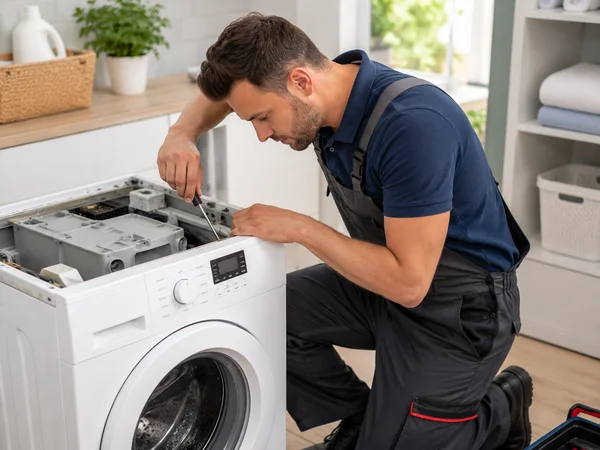
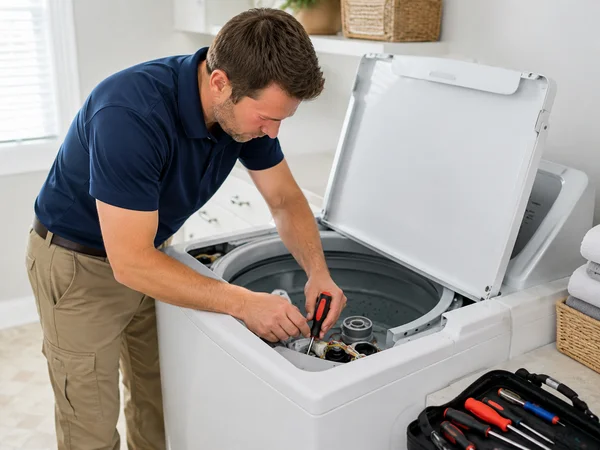
Lid switch testing and drain pump replacement are both doable with basic tools and a multimeter, but they step up in complexity. If the pump filter clean didn’t solve it, Perfect Appliance Repair Tampa can diagnose the rest in one visit.
When to call a washing machine repair tech
Call Perfect Appliance Repair Tampa when the pump filter cleaning didn’t fix it, you hear humming during the drain cycle with no water movement, or your clothes are soaking wet at the end of a full cycle. Error codes displaying on the panel are another clear signal — they point to specific components and cut diagnosis time significantly.
For top-loaders, if your multimeter test shows the lid switch has no continuity when the lid is pressed, that’s a confirmed failure. The part is cheap ($20-40) but getting the panel off and the switch replaced without breaking plastic clips takes some patience.
Cost to repair a washing machine that isn’t draining: drain pump replacement runs $120-250 installed. Lid switch repair is usually $80-150 installed. Door latch on a front-loader is similar.
One Florida-specific note: lint and fabric softener residue build up faster in high humidity. Tampa Bay area machines benefit from pump filter cleaning monthly rather than the standard every-three-months recommendation. If your washer is running sluggish on draining even between clogs, that’s likely why.
Washing machine not draining in Tampa Bay, FL?
Perfect Appliance Repair Tampa fixes washer draining issues the same day in most cases. Nine times out of ten it’s the pump filter or drain hose, and Mike can have it draining within an hour. If it turns out to be the drain pump or lid switch, parts are usually on the truck. Upfront pricing before any work starts, no surprises on the invoice. Call now to get same-day washer repair in Tampa Bay.
Common questions about washing machine not draining
Why is my washing machine full of water and won't drain?
The most common cause is a clogged pump filter, especially on front-loaders. Coins, lint, and small items block the filter over time and stop the drain pump from moving water. Check the access panel on the bottom front of the machine first. If the filter is clear, the drain hose or pump itself may be the problem.
Where is the pump filter on a front-load washer?
The pump filter, sometimes called the coin trap, is behind a small access panel on the bottom front corner of most front-load washers. It's usually a round cap you unscrew by hand. Have towels down before you open it — there's always residual water in there.
Can I manually drain my washing machine?
Yes. On front-loaders, the drain hose near the pump filter access panel can be pulled out and held low to let water flow by gravity into a pan. For top-loaders, you can disconnect the drain hose from the standpipe and lower it to the floor. It's slow but it works if you need to get clothes out mid-cycle.
Why does my washer stop mid-cycle with water in it?
On top-loaders, this usually points to a lid switch failure — the machine thinks the lid is open and cuts power to the drain pump. On front-loaders, it's often a door latch that's not registering as fully closed. Both issues show up mid-cycle and leave the tub full. A quick multimeter test confirms the lid switch. Perfect Appliance Repair Tampa can diagnose either same day.
How much does it cost to fix a washing machine that won't drain?
Drain pump replacement typically runs $120-250 installed in Tampa Bay. Lid switch repair is usually $80-150 installed. If it's just a clogged pump filter, a service visit costs a fraction of that — or you can clean it yourself for free. Perfect Appliance Repair Tampa gives upfront pricing before starting any washer repair.