

The sound your dryer makes tells you what’s failing. Here’s the quick guide:
- Squealing or squeaking: drum bearing, drum seal, or worn belt
- Thumping or banging: flat-spotted drum support rollers
- Rattling: loose item in the drum, or worn rear drum bearing
- Scraping or grinding: worn drum felt seal
- Clunking at startup: rollers, belt tension, or drum glide
Match the sound to the section below to find the fix.
Why is my dryer making noise?
Perfect Appliance Repair Tampa
What each dryer noise means
Dryer squeaking fix: drum bearing and drum seal noise
A high-pitched squeal that runs continuously usually points to the drum bearing — the rear support that keeps the drum spinning true. As the bearing wears, the drum sits slightly off-axis and starts rubbing. The drum seal, a felt strip that runs around the drum opening, can also squeal when it dries out or starts to fray. Both problems get louder over time. A dryer making loud noise from a bad bearing will eventually seize if ignored. Drum bearing replacement runs $100 to $180 with labor. If the squealing started recently and the dryer’s under five years old, it’s worth fixing.
Dryer drum roller noise: thumping or banging
Thumping or banging — especially a rhythmic thud that matches the drum rotation — almost always means the drum support rollers have flat-spotted. Rollers are small wheels that support the front or rear of the drum. When a dryer sits unused for several months, the part of the roller resting on the drum develops a flat spot. In Tampa, appliances that sit idle while owners travel can come back from a long stretch with this exact problem. The thumping usually gets worse at startup and may smooth out after a few minutes, or it may not. Roller replacement requires disassembly but isn’t a huge job for an experienced dryer repair tech.
Dryer making banging noise: rattling sounds
Before assuming a mechanical problem, check inside the drum. Coins, screws, bra underwires, and small hardware make a distinctive rattle that stops the moment you pull the item out. If the drum is clear, the noise is coming from the rear drum bearing — a sleeve or ball bearing at the back of the drum that wears over time and starts to knock. A loose rear bearing also causes the drum to wobble slightly, which can lead to scraping if it gets bad enough. Rattling that persists after clearing the drum needs a tech to open the machine and check the bearing.
Dryer drum bearing noise: scraping or grinding
A scraping sound — like metal dragging on metal — usually means the drum felt seal has worn through. The felt strip lines the front or rear drum opening and keeps the drum from contacting the cabinet directly. When it wears away, the metal drum edge starts scraping against the cabinet frame. You’ll often see gray or black scuff marks on clothes if this has been going on a while. Felt seal kits cost $10 to $20 for most brands. The repair requires pulling the drum, which is intermediate-level DIY. Ignore it and the drum edge can score the cabinet, turning a cheap fix into a bigger one.
Loud humming or buzzing from the dryer
A loud hum that’s new — not the normal motor hum — usually means the motor bearings are starting to go. Motor noise tends to be low and continuous, not rhythmic like roller noise. It often comes with slightly longer heat cycles or the dryer taking longer to reach temperature, since a struggling motor doesn’t move air as efficiently. Motor replacement is the most expensive dryer repair on this list — parts and labor can hit $200 to $300 on some models. If the dryer making noise is also losing heat performance, have a dryer repair tech check both the motor and the vent system before deciding on next steps.
Clunking at startup
A single clunk or series of knocks that happen when the dryer first starts, then go away, usually point to rollers, belt tension, or drum glides. Rollers that have flat-spotted will clunk hard on startup until they roll the flat spot past the contact point. A worn drum belt can also slip and snap at startup before it settles under tension. Drum glides — small plastic slides at the front of the drum — crack and clunk when they break. All three are wear items that need replacement once they start making noise. A clunk that shows up every cycle and gets louder each week isn’t going away on its own.
How to quiet a noisy dryer (DIY steps)
Some dryer noises have quick fixes you can handle at home. Here’s where to start before calling a dryer repair tech.
- Check the drum for loose items. Coins, screws, and underwires make a convincing rattle. Reach in, run your hand around the drum, and check the drum baffle pockets. Takes 30 seconds. If the rattling stops, you’re done.
- Inspect the drum felt seal. Open the dryer door and run your finger around the felt strip at the drum opening. Worn or missing sections mean the seal needs replacing. While you’re there, look for gray scuff marks inside the drum — a sign the metal has been contacting the cabinet.
- Check drum belt tension. On many dryers, you can reach in through the front panel or lint trap housing and push the drum by hand. If it moves more than an inch or two without resistance, the belt is loose or worn. A slack belt can squeak and slip at startup.
- Lubricate the drum bearing. Some models have an accessible rear bearing that takes a few drops of machine oil. Check your model’s service manual — not all bearings are serviceable this way, but when they are, it can buy you time before replacement.
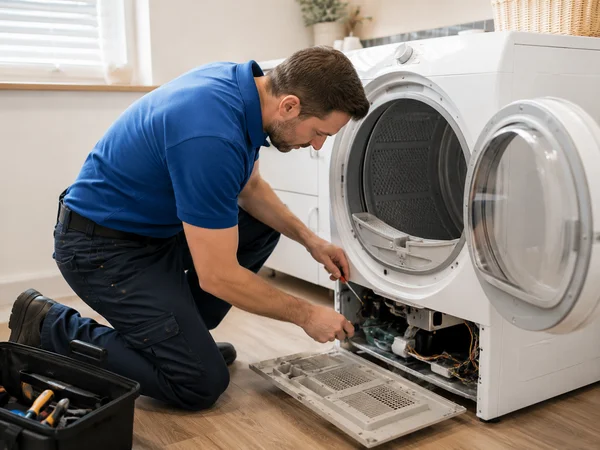
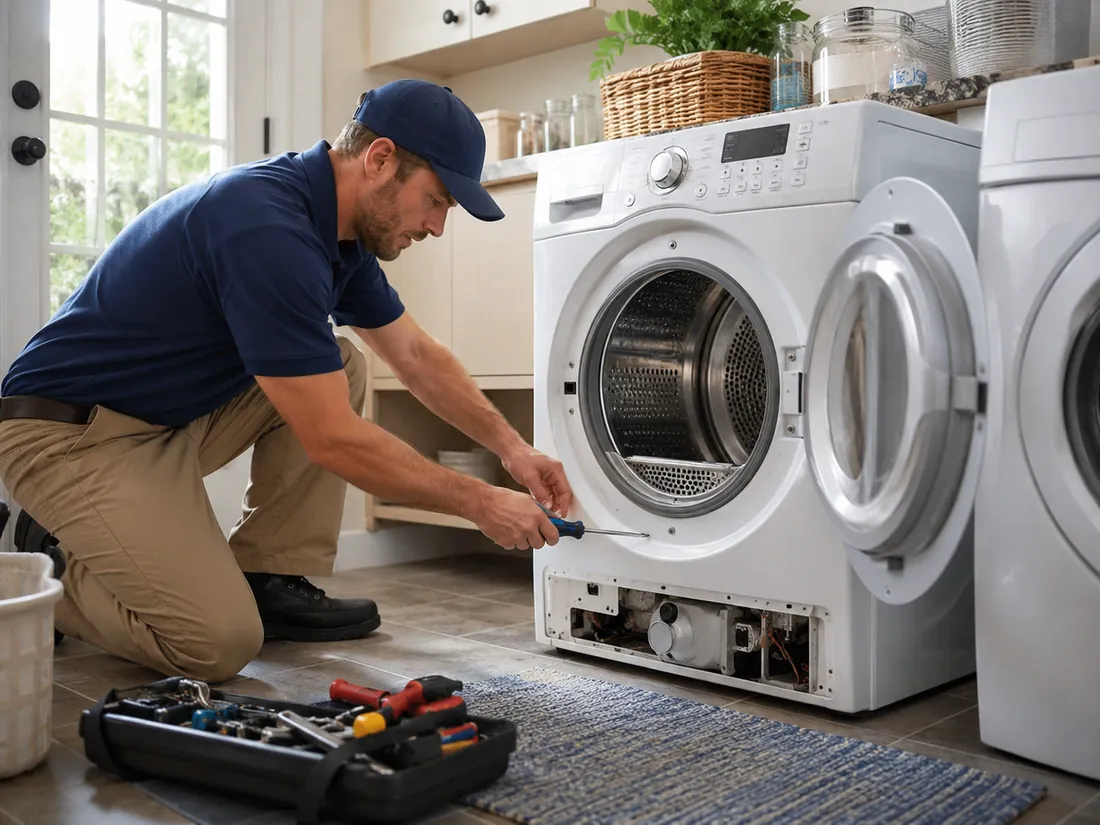
Drum roller replacement is intermediate-level DIY — it requires disassembling the cabinet and removing the drum. If you’re not comfortable with that, a dryer repair tech can handle it in one visit.
When dryer noise needs a tech
A few situations mean it’s time to stop running the dryer and call a dryer repair tech.
Grinding that’s getting worse. Scraping or grinding that has progressed over weeks is causing active damage. Each cycle scores the drum or cabinet further. The longer you wait, the more expensive the fix.
Heat plus noise. A dryer making noise and also losing heat performance points to the motor. Motors that fail under load pull harder and run hotter. This combination usually means the motor is close to the end.
Scraping that leaves marks on clothes. If clothes are coming out with gray streaks, the drum is contacting metal somewhere. Stop using it until the felt seal or drum bearing is repaired.
Bearing noise after a long idle period. Dryers in Tampa that sit unused for months — snowbird households, vacation properties — often come back with flat-spotted rollers and seized bearings. This isn’t a one-part fix; the tech needs to check all the drum support components.
Cost reference: drum roller replacement runs $80 to $150 with labor. Drum bearing work is $100 to $180. Motor replacement can reach $200 to $300 depending on the model.
Noisy dryer repair in Tampa Bay, FL?
Perfect Appliance Repair Tampa fixes dryer making noise calls across Tampa Bay same day. Tampa dryers that sit unused through summer or while owners travel see accelerated roller flat-spotting and bearing wear — it’s one of the more common calls Mike gets in the fall. In most cases, Mike diagnoses the sound over the phone and arrives with the right part already on the truck. Upfront pricing before any work starts. Call or book online today.
Common questions about a dryer making noise
Why is my dryer making a squealing noise?
Squealing almost always points to the drum bearing or the drum seal. The drum bearing supports the rear of the drum — when it wears, it produces a high-pitched squeal that gets louder over time. A dry or fraying drum felt seal can also squeal. Both are repairable; the drum bearing job runs $100 to $180 with labor.
Why does my dryer thump or bang?
Thumping that matches drum rotation usually means the support rollers have flat-spotted. This is especially common in dryers that sat unused for several months — the part of the roller resting on the drum develops a flat spot. The banging is loudest at startup and may smooth out, or it may get progressively worse. Roller replacement fixes it.
Is it safe to use a dryer that's making noise?
Depends on the sound. A rattle from a loose coin is harmless. But scraping means the drum is contacting metal and leaving marks on clothes — stop using it. A loud hum with reduced heat points to the motor, and running a failing motor can cause it to burn out completely. When in doubt, have a tech check it before the next cycle.
How much does dryer drum repair cost?
Drum roller replacement runs $80 to $150 with labor in Tampa Bay. Drum bearing work is $100 to $180. A drum felt seal replacement is on the lower end, usually $75 to $130 with labor since the part itself is cheap. Motor replacement is the most expensive dryer repair — expect $200 to $300 depending on the brand and model.
How long do dryer drum rollers last?
Drum rollers typically last 10 to 15 years under normal use. They wear faster in dryers that run heavy loads frequently, or in machines that sit idle for long stretches — inactivity causes flat-spotting. If your dryer is 8 to 10 years old and starting to thump, rollers are the likely culprit and worth replacing before they damage other drum components.