

A washing machine leaks from one of four places, and where it leaks tells you almost exactly what’s wrong. Leak from the door on a front-loader? That’s the door seal. Water pooling underneath? You’re looking at the drain pump or a hose connection. Dripping from the detergent drawer? Clogged siphon or too much soap. Coming from the back? Check the inlet hoses. Pinning down the leak location first saves you from replacing parts you don’t need.
Why is my washing machine leaking water?
Perfect Appliance Repair Tampa
Where is your washer leaking from?
Leaking from the door (front-loaders)
The door seal — that thick rubber gasket running around the inside of the door opening — is the most common leak source on front-load washers. Over time it gets stiff, torn, or coated in black mold. In humid places like Tampa, mold growth on the gasket accelerates fast and can break down the rubber faster than normal wear. You’ll usually see discoloration or a slimy buildup in the folds. Once the gasket loses its seal, water escapes every cycle. Replacement is the fix — cleaning can slow it down, but a cracked or stiff gasket won’t hold.
Leaking from the bottom
Water at the base of the machine usually means the drain pump or one of its hoses has a problem. The pump hose can crack from age, or the clamp holding it to the pump body can loosen. Sometimes the pump housing itself cracks. You might also hear a grinding noise if debris is caught in the pump. This kind of washing machine leaking underneath tends to get worse each cycle, so don’t ignore it.
Leaking from the detergent drawer
A clogged siphon in the dispenser forces water out of the drawer opening instead of through the drum. The fix is usually simple: pull out the drawer, pop off the siphon cap, rinse everything under hot water. Overfilling with HE detergent causes the same problem — too much soap creates foam that spills out the front.
Leaking from the back
If water is trickling down the back of the machine, start with the inlet hoses — the two braided hoses connecting the washer to your hot and cold water supply. Check both ends: the wall connection and the back of the machine. Hand-tighten any loose fittings. If the hose itself is cracked or the rubber washer inside is worn, replace it. These hoses should be inspected every few years regardless.
Leaking during spin on top-loaders
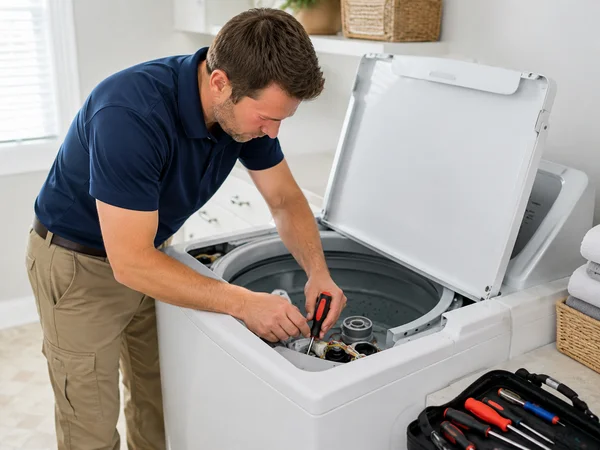
A top-load washer leaking during the spin cycle — especially if the water seems to be coming from inside the cabinet — often points to a worn tub seal or a cracked outer tub. This is a more involved washer repair. It won’t fix itself, and running the machine keeps pushing water into the motor and cabinet floor.
DIY fixes for a leaking washing machine
Some washer leaks are easy to handle yourself before calling anyone. Work through this list in order.
- Check and tighten the inlet hoses at the back of the machine. Hand-tighten both ends — wall valve and washer connection. This is the most common easy fix and takes two minutes.
- Clean the door gasket. Pull back the folds of the rubber seal and wipe out any mold, lint, or debris. A 50/50 bleach and water solution on a cloth works well. Mold in the folds breaks down the rubber over time.
- Remove and rinse the detergent drawer. The small siphon cap on the drawer pops off — rinse it and the drawer channel under hot water. If soap has been building up, a toothbrush helps.
- Run a hot cleaning cycle with no clothes and a washer cleaner tablet. This clears soap scum from the drum and pump hose that can cause backup and minor leaking.
- Check where the drain hose connects to the standpipe or wall. Make sure it’s seated at least 6 inches into the pipe but not pushed in so far it creates a siphon.
Stop running the machine if water is anywhere near the electrical connections, the control panel, or the bottom of the motor. Water and electricity near the same space is a real problem — shut off power at the breaker until a tech can look at it.
When to stop using a leaking washer and call a tech
Not every washing machine leak is a DIY situation. Stop running the machine and call for washer repair if any of these apply.
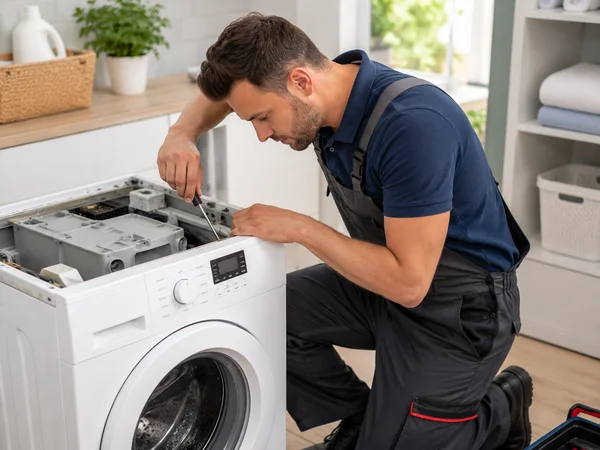
Water is pooling near the power cord, motor, or control board. That’s not a leak anymore — that’s a safety issue. Turn off power at the breaker, not just the machine.
The leak is getting bigger with each load. A drain pump leak that starts small will get worse because water pressure inside the machine keeps stressing the crack. What’s a minor drip today can soak the subfloor in a week. Floor damage and mold remediation cost far more than fixing the pump early.
Water is coming from inside the cabinet — not from a visible hose or the door — and you can’t locate the source. That usually means the pump or the tub seal, and both require pulling the machine apart.
If you’re in Tampa or anywhere in the Bay Area, pay extra attention to front-loader door seals. The humidity here means mold establishes itself in the gasket folds within months, not years. Perfect Appliance Repair Tampa sees this constantly — a seal that might last five years in a dry climate is often compromised in two to three in Florida. An annual check of that gasket is worth doing.
Washing machine leak repair in Tampa Bay, FL
Perfect Appliance Repair Tampa fixes washer leaks the same day in most cases. Whether it’s a door seal worn out by Tampa’s humidity, a drain pump that’s given up, or inlet hoses that just need tightening, we carry the most common parts on the truck so we’re not scheduling a second visit to finish the job. Upfront pricing after diagnosis — no surprises on the invoice. A small leak ignored becomes a floor replacement. Call now to get it looked at today.
Common questions about washing machine leaks
Why is my washing machine leaking from the bottom?
A washing machine leaking from the bottom usually means the drain pump has failed, a pump hose has cracked, or a hose clamp has loosened. It can also be the tub seal on a top-loader. The leak tends to worsen with each cycle, so it's worth diagnosing quickly before water reaches the subfloor.
Why is my front-load washer leaking from the door?
Front-load washers leak from the door when the door seal — the rubber gasket around the drum opening — is torn, stiff, or mold-damaged. In Tampa's humidity, that gasket degrades faster than average. If you see black buildup in the folds, the seal needs cleaning at minimum and likely replacement.
Can I still use my washing machine if it's leaking?
It depends on where the water is going. If it's a small drip from a loose inlet hose at the back, you can tighten it and monitor. But if water is near electrical connections, the motor, or getting worse each load, stop using the machine and shut off power at the breaker until someone takes a look.
How much does it cost to fix a leaking washing machine?
Washer repair costs vary by the cause. Tightening a loose hose is free. Replacing a door seal typically runs $150 to $250 in parts and labor. A drain pump replacement is usually $180 to $300. A tub seal on a top-loader is more involved and can run higher. Perfect Appliance Repair Tampa gives upfront pricing after diagnosis.
How do I clean a washing machine door seal?
Pull back all the folds of the rubber gasket and wipe out any mold, lint, or trapped debris with a cloth dampened in a bleach-water solution. Pay attention to the bottom fold — that's where water and gunk collect. Run a hot empty cycle afterward. Do this monthly in humid climates to slow seal deterioration.
Why is my washing machine leaking from the detergent drawer?
Water spilling from the detergent drawer usually means the siphon cap inside the drawer is clogged with detergent buildup. Pull out the drawer, remove the siphon cap, and rinse it under hot water. Using too much soap — especially non-HE detergent in an HE machine — causes the same overflow problem.